
Progress from knowledge to clinical mastery.
The Cephtactics Postgraduate Diploma in Orthodontics is the next stage for clinicians who have already completed the Certificate/PGCert and want to move beyond taught foundations into supervised clinical development, advanced treatment planning, portfolio building and deeper academic assessment.
Not simply more teaching. More responsibility, feedback and clinical depth.
The Certificate builds the foundations: diagnosis, treatment planning, biomechanics and appliance systems. The Diploma is designed to take those foundations into a more demanding stage of development where students apply, defend, evaluate and refine their clinical decisions.
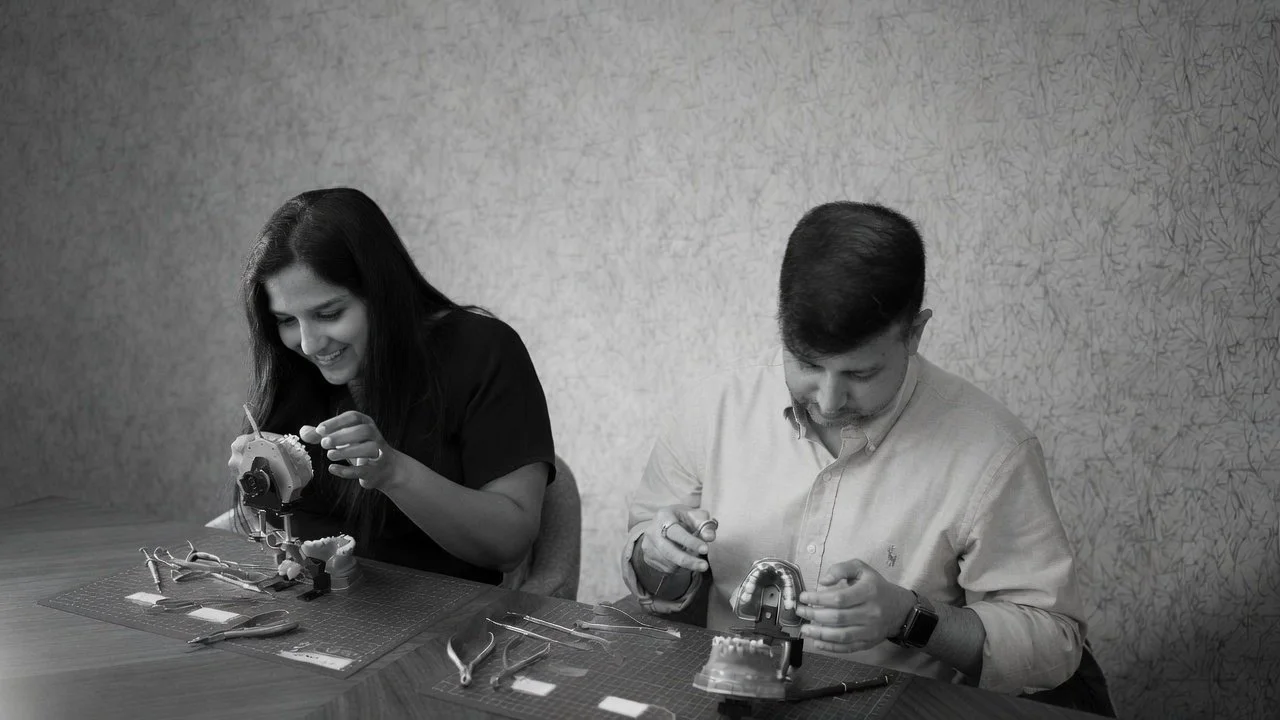
Rather than learning only through lectures, Diploma students progress through mentored case activity, structured case evaluation, treatment-planning sessions, advanced contact days, written work, journal discussion, OSCE-style assessment and a viva examination.
What changes at Diploma level?
- Build and document a meaningful orthodontic case portfolio
- Receive repeated treatment-planning feedback throughout the year
- Develop stronger clinical reasoning, not just appliance familiarity
- Learn to evaluate your own outcomes and decision-making critically
- Progress academically through essays, journal clubs, OSCEs and viva
For clinicians who have completed the Certificate and want to go further.
Certificate / PGCert
Build core orthodontic knowledge across diagnosis, treatment planning, biomechanics, fixed appliances, aligners, removable appliances and interceptive orthodontics.
Postgraduate Diploma
Apply that knowledge through supervised case experience, repeated case evaluation, advanced treatment planning, portfolio assessment and higher-level academic work.
Ten cases. Multiple systems. Real clinical progression.
Diploma students are expected to build a portfolio across different forms of orthodontic treatment, giving the programme a clear clinical focus rather than relying on classroom learning alone.
A demanding programme built around application, evaluation and accountability.
Deep reflection and structured evaluation of clinical cases.
Ten portfolio cases across fixed, aligner and interceptive orthodontics.
Directed and self-led reading to deepen clinical and academic understanding.
Two short-answer OSCE-style assessments focused on applied knowledge.
Four dedicated advanced face-to-face teaching days.
Ten group sessions devoted to diagnosis, planning and case discussion.
Ten subject-led MCQ assessments distributed throughout the year.
Six essays designed to develop structured evidence-based reasoning.
Oral examination testing understanding, reasoning and clinical defence.
Six journal club activities supporting critical appraisal of evidence.
More access. More feedback. More individual development.
At Diploma level, the value comes from repeated interaction with experienced clinicians while you are actively treating and evaluating cases. The programme is designed to create a feedback loop: plan, discuss, treat, review, refine.
- Regular treatment-planning Zoom sessions
- Case discussion and structured clinical evaluation
- Advanced in-person contact days
- Academic feedback through essays and journal work
- Viva preparation and assessment
- Progression within a clinician community already trained in the Cephtactics approach
How you will be assessed
- 10 clinical cases: 4 fixed, 4 aligner, 2 interceptive
- Structured case evaluation
- 10 MCQ assessments throughout the year
- 6 academic essays
- 6 journal club activities
- 2 short-answer OSCEs
- 10 treatment-planning group Zoom sessions
- 4 advanced contact days
- 1 viva examination
- Independent postgraduate reading
A qualification should demonstrate more than attendance.
The Diploma has been structured so that progression is evidenced through sustained engagement. Students are expected to demonstrate clinical reasoning, application, reflection and academic development across the year.
This is intentionally more demanding than the Certificate. The additional requirements are what create the distinction between attending further teaching and completing a genuine postgraduate progression pathway.
£9,600 for the Diploma stage.
Designed as a premium progression programme for existing Certificate graduates, with significantly greater clinical supervision, assessment, treatment-planning support and portfolio requirements.
- 600 additional programme hours
- 10-case clinical portfolio
- 10 treatment-planning Zoom sessions
- 4 advanced in-person contact days
- Structured academic and clinical assessment
- Viva examination and portfolio progression
Frequently Asked Questions
Who is the Diploma designed for?
The Diploma is designed as the next stage for clinicians who have already completed the Cephtactics Certificate/PGCert pathway and want a more advanced, clinically accountable programme.
How is the Diploma different from the Certificate?
The Certificate focuses on building core orthodontic knowledge and practical foundations. The Diploma adds 600 further hours centred on clinical cases, case evaluation, advanced treatment planning, academic work, OSCE-style assessment, advanced contact days and a viva.
How many clinical cases are required?
The current programme structure requires 10 cases: 4 fixed appliance cases, 4 aligner cases and 2 interceptive cases.
Is the Diploma only classroom based?
No. It is deliberately hybrid, combining advanced contact days, online learning, clinical portfolio work, treatment-planning Zoom sessions, independent reading and formal assessment.
How much does the Diploma cost?
The proposed tuition fee is £9,600, with the option to spread the cost across 12 months at £800 per month.
Ready to take your orthodontic development beyond the Certificate?
Register your interest for the Cephtactics Postgraduate Diploma in Orthodontics and be among the first to receive intake dates, accreditation details and application information when released.
Register Your Interest